Monday, December 7, 2015

They have a festival for everything!

The journey from Lake Titicaca to the capital city of Bolivia, La Pas, was...eventful. It included this crazy-ass ferry system:
                           

and a bus breakdown right outside the city limits, fully equipped with a bus driver who ran away. (No joke, he took off down the side of the road and just kept runnin'. At first we figured he had to go potty and was doing us a kindness by moving away to take care of business. But then he just kept going until we couldn't make him out anymore. I sure hope he got to wherever he was headed.)


With the temperature dropping rapidly, no bus driver, and the continuous false assurance that another vehicle was on its way to fetch us (we were promised it was "only 10 minutes away" over the course of 3 hours), we decided to hop into a cab with other travelers and be on our way. And success! We made it! ...Almost. Upon arrival at La Alta, the urban sprawl of La Pas that geographically surrounds the capital several hundred feet above it (imagine an upside down bowler hat with La Pas in the bowl of the hat and La Alta on the rim. But the rim is very large.), we were waylaid by an occurrence that is quite common in Bolivia: a festival. It turns out that festivals and protests happen frequently and, of course, necessitate the day off from work and road blockades. After several minutes of zero movement (besides opening the door so his daughter could stick her butt out of the van to pee), the driver pulled over and said he was done. Our best chance of getting to La Pas: hike down the side of the bowler hat. Doing so afforded us breathtaking views of the city (but maybe that was just the elevation...):


Hi, La Paz!

(La Paz Pictures start in: 136_0715)


Sunday, April 6, 2014

A lake by any other name


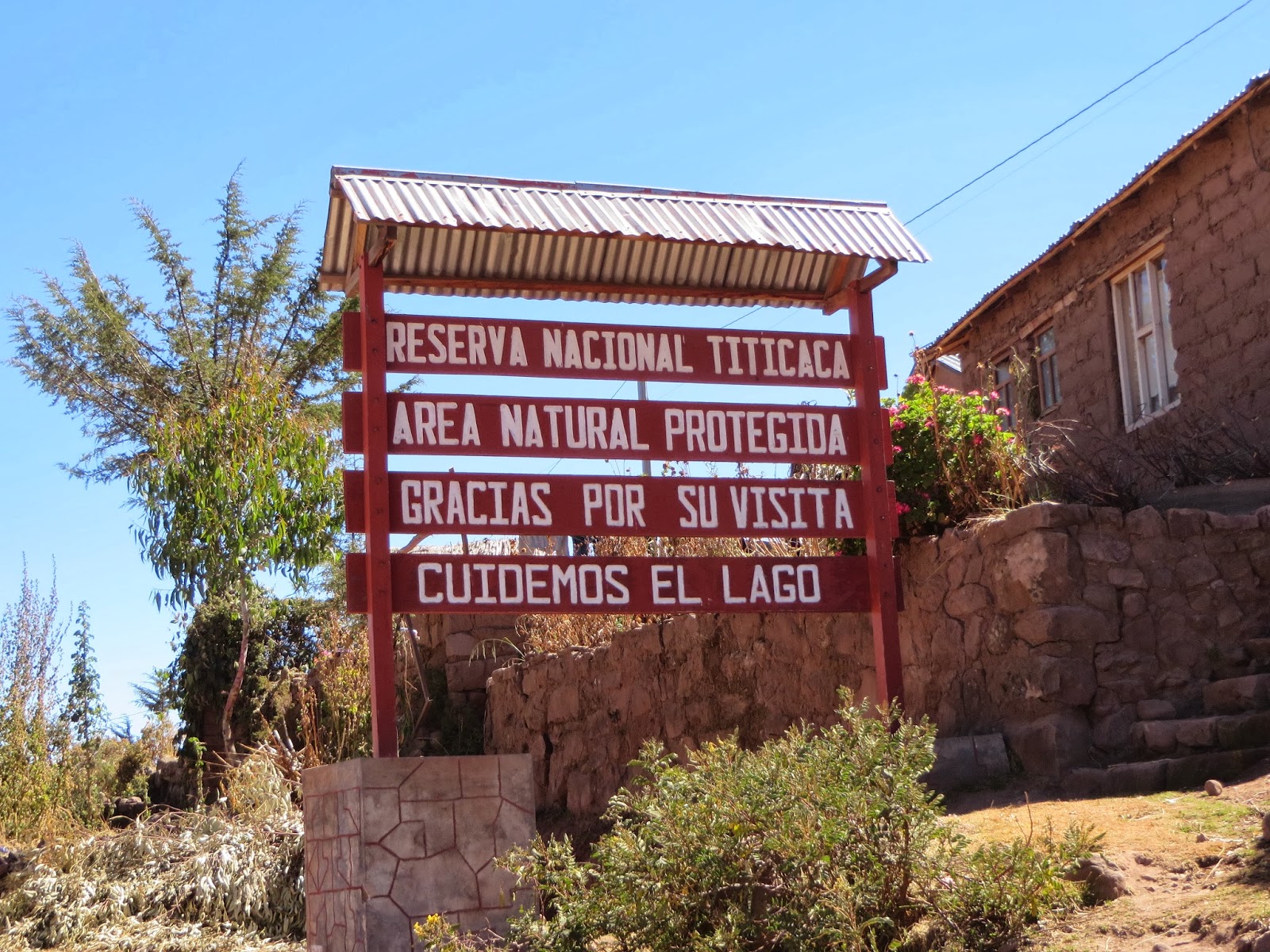
In Spanglish the name Titicaca sounds a bit well, rude, but in the Quechua language of the indigenous Andes people it translates into "grey puma" owing to the lake's shape. Our trip here included a few days in the secluded and very rustic village of Llachon, viewing the beautiful scenery and kayaking while enjoying the hospitality of locals and communicating primarily in hand gestures. (Spanish is decidedly not the native language of Peru and Bolivia, and Quechua is a super tough language to learn.) Also, we visited the famous "floating reed island" community of Uros, and then crossed the Peru/Bolivian border (the lake is split in half and shared by both countries), landing in the town of Copacabana (different from both the song and the famous Brazilian beach).

Llachon - Casa de Valentine

Our experience in Llachon (a trip we made rather randomly based on a fellow traveler's suggestion) was by far the most rustic/rural/remote/you-get-the-idea. No hot water, no shops, little electricity and few people other than our very friendly hostess and another group of tourists provided a tranquil, off-the-grid break.

(Andrew is reminding me that it was also quite frigid....lovely under the bright sun, but freezing at night. I'm talking 2 people squeeze into tiny bed in order to share body heat cold.)


A fascinating aspect of our lovely and modest accommodation was that its build process was in plain site: Dig up clay, pack it into bricks, let it dry, and then, build a house! 


Playing Dress-Up


Natives!

Authentic Travelers

I'm telling you...Peruvians and Bolivians know how to rock a good hat. And how to pack a mini-bus.


The customary triangular hat is popular enough to have a community center/lookout point built in its likeness! Of course, the shape and style of these hats bears some significance, but I no longer remember it, nor do I remember the Quechua word for "triangular hat with pom poms":

Uros - Floating Reed Islands

AKA major tourist trap...


Monday, December 30, 2013

Hidden Gem of the Incas

Machu Picchu

Per the recommendations of everyone we'd met that had already seen the majestic site, we arrived at Machu Picchu in time to watch the sunrise. We then spent the day touring the large ruin, catching bits of "insider info" from the various tour leaders that spoke loud enough to be overheard by freeloaders like us. For this amazing experience, I'll let the pictures speak for themselves.


Sunrise


Perhaps the Incans were tiny?


Site Highlights


Putucusi from Machu Picchu

Role Reversal: Looking back at the summit we'd climbed the day before, for our first view of Machu Picchu.